









If you run a local business in Pakistan or anywhere across South Asia, whether it’s a real estate agency in Lahore, a clinic in Karachi, an e-commerce store in Dhaka, or a law firm in Colombo, your Google rankings directly determine how many new customers find you online.
And at the center of those rankings sits one critical metric: Domain Authority.
Most local business owners hear “improve your DA” and immediately think about backlinks. Backlinks matter, no question. But what many miss is that a large portion of DA growth is driven by what’s happening on your own website, your on-page SEO. Content quality, site structure, page speed, internal links, and schema markup are all signals you control completely, starting today.
This guide covers the most impactful on-page SEO techniques that improve Domain Authority in 2026, explained clearly for local business owners who want real results without the technical overwhelm.
What Does On-Page SEO Have to Do With Domain Authority?
Quick Answer: Domain Authority is influenced by the overall quality and trustworthiness of your website, and on-page SEO directly shapes both. When your pages are well-structured, content is authoritative, internal links are logical, and technical signals are clean, Google trusts your domain more. That trust is reflected in a higher DA score. For local businesses in Pakistan and South Asia competing in crowded niches, strong on-page SEO is often the most accessible and cost-effective path to DA growth.
Domain Authority (a metric developed by Moz, scored 1–100) predicts how well your website will rank in search results. While backlinks are a major input, the quality signals from your own pages feed directly into how Google and third-party tools evaluate your domain’s credibility.
Think of it this way: even if you earn strong backlinks, a poorly structured website with thin content, slow load times, and broken internal links will limit how high your DA can climb. On-page SEO is the foundation that makes every other SEO effort more effective.
Before diving into techniques, take 60 seconds to check your domain authority free. Knowing your current DA and spam score gives you a clear baseline to measure progress against.
Technique 1: Optimize Title Tags & Meta Descriptions for Every Page
Quick Answer: Title tags and meta descriptions are among the most fundamental on-page SEO elements. A well-optimized title tag tells Google exactly what your page is about, helping it rank for the right keywords. Meta descriptions influence click-through rates from search results, and higher CTR sends positive engagement signals that support DA growth. Every page on your local business website should have a unique, keyword-rich title tag under 60 characters and a compelling meta description between 140–160 characters.
For local businesses across Pakistan and South Asia, this is where most websites fall short — either missing meta tags entirely or duplicating them across multiple pages.
Best Practices for Title Tags in 2026:
- Place your primary keyword near the beginning of the title
- Keep it under 60 characters to avoid truncation in SERPs
- Include your city or region for local SEO value
- Make every title unique — no two pages should share the same title tag
Best Practices for Meta Descriptions:
- Write 140–160 characters — enough to be descriptive, short enough to display fully
- Include your primary keyword naturally — Google bolds it in search results
- Add a soft call-to-action (e.g., “Book a free consultation today”)
- Highlight a local trust signal
These small optimizations compound across your entire site, and collectively signal content quality and relevance to Google at scale.
Technique 2: Create Deep, Topically Authoritative Content
Quick Answer: In 2026, Google rewards websites that demonstrate deep expertise on a specific topic — not just pages that target individual keywords. For local businesses in Pakistan and South Asia, this means creating comprehensive content clusters around your core services. A dental clinic shouldn’t just have a homepage, it should have detailed pages on teeth whitening, root canals, pediatric dentistry, and local oral health guides. This topical depth signals authority to Google and directly supports DA growth.
Content quality is arguably the single most powerful on-page signal for Domain Authority improvement.
What “Topical Authority” Means for Local Businesses:
Instead of publishing random blog posts, build a content cluster — a pillar page covering your main service broadly, supported by cluster pages covering specific subtopics in depth.
Example for a real estate agency in Islamabad:
- Pillar page: Complete Guide to Buying Property in Islamabad
- Cluster pages: Best areas to buy in Islamabad 2026 / How to get a home loan in Pakistan / Property registration process in Islamabad / Real estate market trends Pakistan
Each cluster page links back to the pillar — creating a web of topical relevance that Google reads as genuine expertise.
Content Quality Checklist for 2026:
- Minimum 800–1,200 words for service pages, 1,500+ for blog posts
- Answer the searcher’s full intent — don’t just target keywords, solve problems
- Use local examples and context — reference Pakistani cities, local regulations, and regional pricing
- Update content regularly — outdated pages signal neglect to Google
- Include original insights — data, case studies, or expert commentary that can’t be found elsewhere
Technique 3: Build a Strategic Internal Linking Structure
Quick Answer: Internal linking is one of the most underused on-page SEO techniques for improving Domain Authority. By linking related pages within your website using descriptive anchor text, you distribute link equity across your domain, help Google discover and index all your pages, and signal the topical relationships between your content. For local business websites in South Asia, a well-planned internal linking structure can significantly strengthen overall domain authority without any external investment.
Internal links are essentially your website’s nervous system — they connect pages, pass authority between them, and guide both users and search engines through your content.
Internal Linking Best Practices:
- Link from high-authority pages to newer or weaker pages — spread your DA across the domain
- Use descriptive, keyword-rich anchor text — not “click here” but “guide to property registration in Lahore.”
- Link contextually — only link when it genuinely adds value for the reader
- Audit broken internal links regularly — dead links hurt both UX and crawlability
- Create a logical site hierarchy — Homepage → Category pages → Service/blog pages
A local business website with 20–30 well-interlinked pages will outperform a 100-page site with poor internal linking structure, every single time.
Technique 4: Improve Core Web Vitals & Page Experience
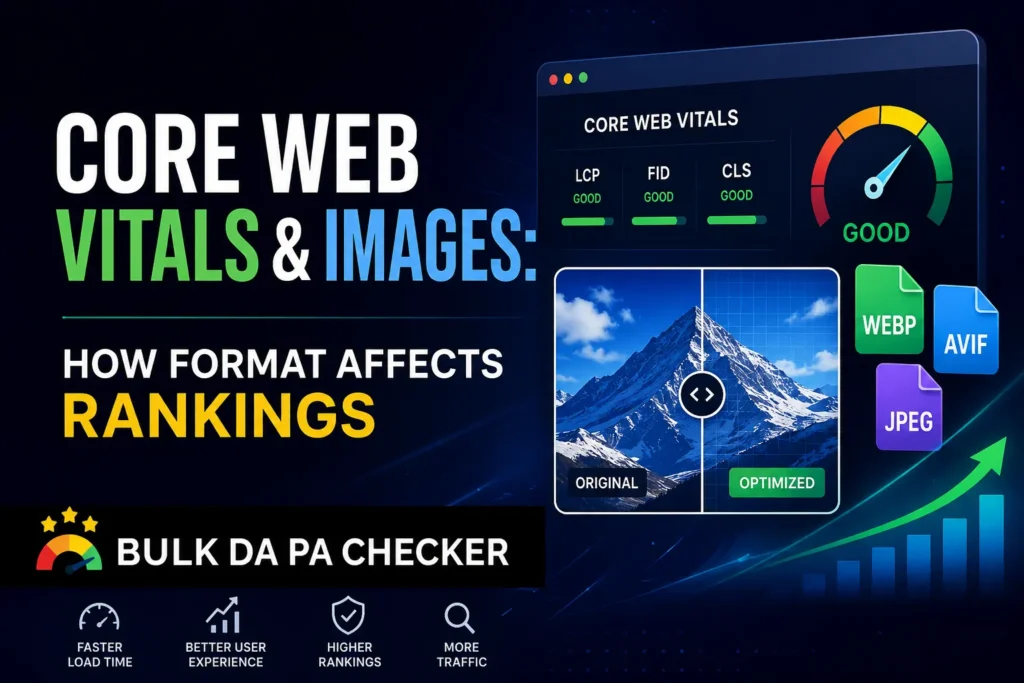
Quick Answer: Google’s Core Web Vitals, Largest Contentful Paint (LCP), Interaction to Next Paint (INP), and Cumulative Layout Shift (CLS) are confirmed ranking factors that directly affect how Google evaluates your site’s quality. Slow, unstable pages frustrate users and signal low quality to Google’s algorithm. For local businesses in Pakistan where mobile internet speeds vary, optimizing Core Web Vitals is especially critical for maintaining competitive Domain Authority scores.
Page experience signals tell Google whether real users find your website fast, stable, and easy to use — all of which feed into domain-level trust.
Core Web Vitals Targets for 2026:
- LCP (Largest Contentful Paint): Under 2.5 seconds — how fast your main content loads
- INP (Interaction to Next Paint): Under 200ms — how quickly your page responds to user input
- CLS (Cumulative Layout Shift): Under 0.1 — how stable your page layout is during loading
Quick Wins for Pakistani Local Business Websites:
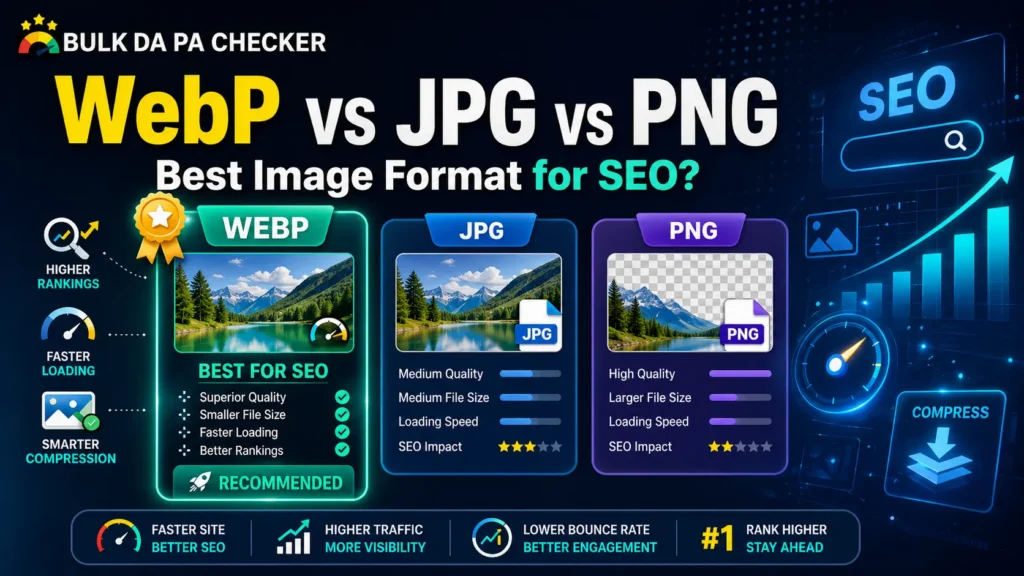
- Compress all images before uploading — use WebP format where possible
- Use a fast local or regional hosting provider — server location affects load times significantly for South Asian audiences
- Minimize JavaScript and CSS — remove unused scripts that slow rendering
- Enable browser caching — returning visitors load your pages faster
- Use a lightweight WordPress theme — avoid bloated page builders where possible
Run your site through Google PageSpeed Insights and address the top three issues it flags first.
Technique 5: Implement Schema Markup & Structured Data
Quick Answer: Schema markup is code added to your website that helps Google understand your content more precisely. For local businesses in Pakistan and South Asia, implementing LocalBusiness schema, FAQ schema, and Review schema helps Google display rich results, star ratings, FAQs, business hours, directly in search results. These enhanced listings improve click-through rates and signal content quality, both of which support Domain Authority growth over time.
Schema markup is one of the most underutilized on-page SEO tools among South Asian local businesses — and one of the highest-impact quick wins available.
Essential Schema Types for Local Businesses:
- LocalBusiness Schema — name, address, phone, hours, geo-coordinates
- FAQ Schema — turns your FAQ section into expandable rich results in Google
- Review / AggregateRating Schema — displays star ratings in search results
- BreadcrumbList Schema — improves site navigation signals for Google
- Service Schema — defines specific services you offer with descriptions and prices
Use Google’s Rich Results Test to validate your schema implementation before publishing.
Technique 6: Optimize Fully for Mobile Users
Quick Answer: Google uses mobile-first indexing, meaning it crawls and evaluates your mobile site version as the primary signal for rankings. In Pakistan and across South Asia, the overwhelming majority of local search happens on smartphones. A website that performs poorly on mobile will struggle to grow its Domain Authority regardless of how strong its desktop experience is. Mobile optimization is not optional in 2026, it is the baseline expectation.
With mobile internet penetration exceeding 70% across Pakistan, India, Bangladesh, and Sri Lanka, your mobile experience is your primary SEO battleground.
Mobile Optimization Checklist:
- Use a responsive design that adapts cleanly to all screen sizes
- Make tap targets large enough — buttons and links should be easy to tap on small screens
- Avoid intrusive pop-ups that cover content on mobile — Google penalizes these
- Test on actual devices — not just desktop browser simulations
- Ensure fonts are readable without zooming — minimum 16px body text
Technique 7: Fix Crawlability & Indexing Issues
Quick Answer: If Google can’t crawl and index your pages correctly, even perfect on-page SEO won’t improve your Domain Authority. Common crawlability issues include broken links, incorrect robots.txt settings, missing XML sitemaps, and orphaned pages with no internal links pointing to them. Regular technical audits ensure Google can access and evaluate every important page on your local business website.
Crawlability Quick Audit Checklist:
- Submit an XML sitemap to Google Search Console
- Check robots.txt — ensure important pages aren’t accidentally blocked
- Fix all 404 errors — redirect broken URLs to relevant live pages
- Eliminate duplicate content — use canonical tags to tell Google which version of a page is authoritative
- Ensure all important pages have at least one internal link pointing to them — orphaned pages don’t get crawled or credited
Use the free on-page SEO tools at BulkDapa.site alongside Google Search Console to identify crawl issues and track your domain’s overall health score.
Common On-Page Mistakes That Hurt Domain Authority
Even experienced local business owners and some SEO agencies in Pakistan make these costly errors:
- Duplicate title tags and meta descriptions across service pages — Google treats them as low-quality
- Thin content pages under 300 words with no real value — they drag down your overall domain quality score
- Keyword stuffing — overusing keywords unnaturally signals spam to Google’s algorithm
- Ignoring image alt text — every image should have a descriptive alt tag for accessibility and SEO
- No internal linking plan — publishing pages in isolation wastes your existing domain authority
- Slow hosting on cheap shared servers — common among Pakistani small business websites, and a silent DA killer
- Copying content from competitors — duplicate content across the web confuses Google and dilutes your authority
FAQs
How long does it take for on-page SEO to improve Domain Authority?
Typically, 3–6 months of consistent on-page optimization before meaningful DA improvements become visible. Domain Authority updates periodically, not in real time, so patience and consistency are essential.
Is on-page SEO enough to improve DA without backlinks?
On-page SEO alone can improve DA to a moderate level, typically DA 20–35, but significant DA growth beyond that generally requires quality backlinks as well. Think of on-page SEO as the foundation that makes your backlink efforts more effective.
Which on-page SEO technique has the fastest impact on DA?
Improving Core Web Vitals and fixing crawlability issues tend to show the fastest measurable impact — often within 4–8 weeks. Content depth and internal linking improvements take longer but compound more powerfully over time.
How do I check if my on-page SEO is working?
Track your Domain Authority score regularly using BulkDAPAChecker — it’s free and lets you monitor DA, PA, and spam score changes as your on-page optimizations take effect. Combine this with Google Search Console for organic traffic and indexing data.