









Every site that has existed for more than a year or two loses backlinks quietly. Pages get redesigned, URLs change, old content gets deleted, and the links pointing to those pages start resolving to nothing. Reclaiming them is one of the fastest ways to recover authority you already earned without writing a single new outreach email.
What a Broken Backlink Actually Is
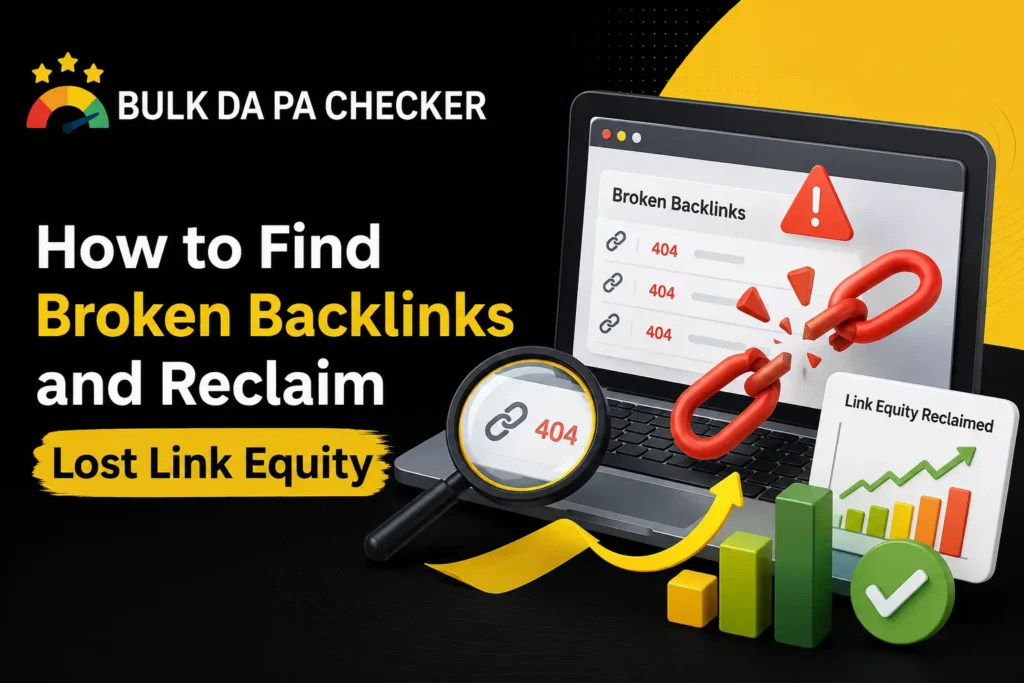
Abroken backlink is an external link pointing to a URL on your site that no longer exists, usually returning a 404 error. The link itself still exists on the linking site, but it points nowhere, which means the authority and traffic it should pass to you is completely wasted.
This differs from a link that was always pointed correctly but to a page with weak content. A broken backlink had real value once, the destination simply moved or disappeared.
Common Causes of Broken Backlinks
Broken backlinks usually come from site migrations without proper redirects, content deleted during a cleanup, blog posts merged or consolidated, and URL structure changes from switching CMS platforms. Almost every cause traces back to a change made without checking which external links pointed to the old URL first.
- Site migrations or domain changes without a full redirect map
- Old blog posts deleted instead of redirected during content pruning
- URL slug changes made for SEO without updating old links
- CMS platform switches that restructure the entire URL pattern
From experience, the worst cases I have audited involve agencies who inherited a client site after a previous developer migrated platforms without exporting a redirect map, leaving dozens of high-authority links from years of earned coverage pointing at dead URLs nobody had tracked.
How to Find Your Broken Backlinks
Finding broken backlinks requires checking every external URL pointing to your domain against your current site structure, flagging any that return a 404 or other error. Doing this manually for a large site is impractical, which is why a dedicated bulk checking tool is the realistic approach for most sites.
Our Bulk Broken Link Checker scans your domain’s backlink and outbound link profile at scale, flagging dead destinations so you are not manually clicking through hundreds of URLs one at a time.
Fixing Broken Backlinks: Redirect vs Outreach
If the linked content still exists under a new URL, a 301 redirect from the old broken URL recovers the link equity automatically with no outreach needed. If the content was deleted entirely, outreach to the linking site requesting an updated link to a relevant replacement page is the only real recovery option.
A 301 redirect is almost always the faster and more reliable fix. Outreach for a manual link update depends on someone at the linking site actually responding, which is far less predictable.
| Scenario | Best Fix |
|---|---|
| Page moved to a new URL | 301 redirect old URL to new URL |
| Page deleted, similar content exists | 301 redirect to closest relevant page |
| Page deleted, no replacement exists | Outreach requesting a link update |
Prioritizing Which Broken Links to Fix First
Prioritize broken backlinks from the highest authority linking domains first, since these recover the most link equity per fix. Backlinks remain one of Google’s top three ranking factors, and a handful of high-authority recoveries often move the needle more than dozens of low-value ones combined.
From experience, I usually sort a broken backlink list by the linking domain’s own authority before touching anything else, since fixing ten low-value broken links takes the same time as fixing one from a major publication, with a fraction of the impact.
Our Bulk DA PA Checker can pull Domain Authority scores for the linking domains on your broken backlink list, which makes this prioritization step quick instead of guesswork.
Preventing Future Broken Backlinks
Maintaining a permanent redirect map for every URL change, never deleting a page without checking for inbound links first, and auditing backlinks on a regular schedule prevents most broken backlink loss before it happens. Prevention is far cheaper than recovery once link equity has already been lost for months.
91% of pages get zero organic traffic from Google according to Ahrefs, and a portion of that group includes pages that used to perform well before a careless migration broke the backlinks pointing to them, a fully avoidable outcome with basic redirect discipline.
Frequently Asked Questions
How often should I check for broken backlinks?
A quarterly check is reasonable for most sites, with more frequent checks recommended immediately after any major migration or redesign.
Does fixing a broken backlink restore lost rankings instantly?
Not instantly. Google needs to recrawl the corrected redirect and reprocess the link signal, which typically takes days to a few weeks.
Should I redirect every broken backlink to my homepage?
No, redirecting to the most topically relevant existing page passes more relevant signal than a blanket homepage redirect.
Can broken backlinks hurt my rankings, not just waste opportunity?
They mainly represent wasted potential rather than active harm, though a large number of 404s discovered during a crawl can be a minor quality signal issue.
Is outreach worth it for a single broken backlink?
It depends on the linking domain’s authority and relevance. High-value domains are usually worth the outreach effort, lower-value ones often are not.
Recover Your Lost Link Equity
Our Bulk Broken Link Checker finds dead backlink destinations across your site in one scan. Pair it with our Bulk DA PA Checker to prioritize fixes by linking domain authority, and visit our expert SEO consultant page for help building a full redirect and recovery plan.