









El RGPD puede parecer un problema para las empresas con sede en Europa, pero la ley no funciona así. Se aplica en función de los datos que se procesan, no del lugar donde está registrada la empresa. Por eso, un pequeño blog de afiliados con pocos visitantes de la UE puede estar tan expuesto como una gran empresa si no cumple con los requisitos básicos.
Lo que realmente exige el RGPD a un sitio web pequeño.
El RGPD exige una política de privacidad clara, una base legal para el tratamiento de datos personales y el consentimiento explícito antes de cargar cookies no esenciales o scripts de seguimiento para los visitantes de la UE. Los sitios web pequeños no necesitan un responsable de protección de datos ni sistemas a nivel empresarial, pero los requisitos básicos de divulgación y consentimiento siguen siendo aplicables en su totalidad.
Esta guía ofrece información general para ayudarle a comprender los conceptos básicos, pero no constituye asesoramiento legal para su situación específica. Un abogado familiarizado con su público y la jurisdicción en la que opera es la persona idónea para tomar una decisión final sobre el cumplimiento normativo.
La ley se centra en el consentimiento y la transparencia, más que en el tamaño de la empresa. Un blog unipersonal con lectores de la UE y una etiqueta de Google Analytics, técnicamente, está sujeto a los mismos requisitos de consentimiento que un gran minorista.
Consentimiento de cookies: El requisito más visible
El RGPD exige que las cookies no esenciales, incluidas la mayoría de las cookies de análisis y publicidad, solo se carguen después de que el visitante dé su consentimiento explícito mediante un banner o ventana emergente. Las casillas de consentimiento premarcadas y los muros de cookies que bloquean el contenido hasta que se dé el consentimiento se consideran incumplimientos según la normativa vigente.
Por experiencia, el error más común que veo en sitios pequeños de WordPress es instalar un plugin de banner de cookies y dar por hecho que ya está, sin comprobar si el plugin realmente bloquea la ejecución de scripts de seguimiento antes de que se dé el consentimiento. Un banner que se muestra pero no retrasa la ejecución de los scripts no ofrece una protección legal real.
- Los scripts de análisis y publicidad no deben ejecutarse antes del consentimiento.
- El banner necesita una opción de rechazo genuina, no solo de aceptación.
- Los registros de consentimiento deben quedar documentados, aunque sea de forma sencilla, en caso de disputa.
Su política de privacidad conforme al RGPD
Una política de privacidad que cumpla con el RGPD debe especificar las categorías de datos recopilados, la base legal para su recopilación, el tiempo de conservación y los derechos específicos de los visitantes de la UE, incluido el derecho a acceder, rectificar o suprimir sus datos. Las políticas de privacidad genéricas redactadas antes de 2018 rara vez cumplen con estos requisitos.
Nuestro generador de páginas legales Crea una política de privacidad que abarca estos puntos de divulgación específicos del RGPD a partir de un breve cuestionario, lo que supone un punto de partida más rápido que reescribir una política antigua línea por línea.
Derechos del interesado que debe tener en cuenta
El RGPD otorga a los visitantes el derecho a solicitar una copia de sus datos, pedir correcciones, solicitar la eliminación y oponerse a ciertos tipos de procesamiento, como los correos electrónicos de marketing. Los sitios web pequeños necesitan un proceso sencillo para gestionar estas solicitudes, aunque se trate simplemente de un procedimiento documentado de respuesta por correo electrónico en lugar de herramientas automatizadas.
El 91% de las páginas no reciben tráfico orgánico de Google según AhrefsY los sitios que sí consiguen un tráfico significativo son precisamente los que acaban enfrentándose a una solicitud de datos, simplemente porque cuantos más visitantes haya, más posibilidades habrá de que alguien ejerza esos derechos.
Herramientas de terceros y exposición al RGPD
La mayor parte de la exposición al RGPD para sitios web pequeños se produce a través de herramientas de terceros, como análisis, redes publicitarias y plataformas de marketing por correo electrónico, en lugar de funciones desarrolladas a medida. Cada herramienta de terceros que procese datos de los visitantes debe mencionarse en la política de privacidad y, idealmente, solo debe cargarse tras obtener el consentimiento del usuario cuando implique seguimiento.
Por experiencia, las agencias que gestionan varios sitios WordPress de clientes suelen descubrir la misma deficiencia durante una auditoría: un antiguo píxel de marketing o un script de widget de chat que sigue activándose en cada carga de página sin que se mencione en ninguna parte de la política de privacidad del sitio y sin ningún control de consentimiento previo.
Los backlinks siguen siendo uno de los tres principales factores de clasificación de Google, y Autoridad de dominio, la puntuación de 1 a 100 desarrollada por Moz., tiende a escalar más rápido en sitios que combinan contenido sólido con señales de confianza, incluidas páginas de cumplimiento visibles, que generan confianza tanto en los visitantes como en los usuarios que realizan reseñas.
Lista de verificación práctica del RGPD
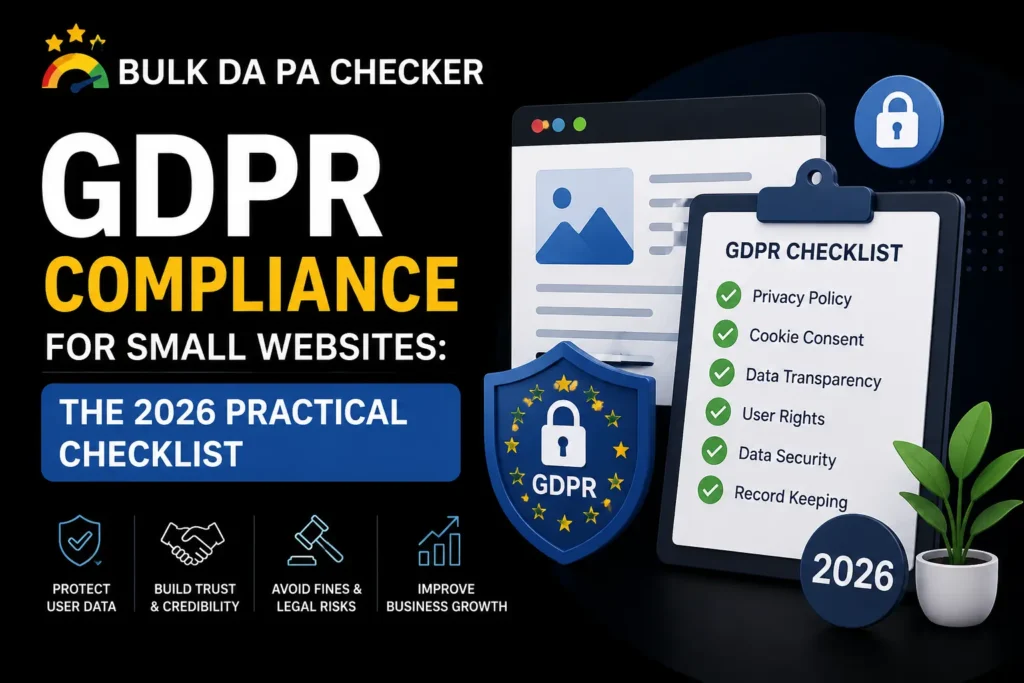
Una lista de verificación inicial práctica incluye una política de privacidad específica para el RGPD, un banner de consentimiento que bloquea los scripts antes de obtener el consentimiento, un proceso documentado para las solicitudes de datos y un inventario de todas las herramientas de terceros que recopilan datos de los visitantes. Nada de esto requiere software empresarial para un sitio web pequeño típico.
| Elemento de la lista de verificación | Por qué es importante |
|---|---|
| Política de privacidad específica del RGPD | Requisito fundamental de divulgación legal |
| Banner de consentimiento que bloquea los scripts antes del consentimiento. | Previene la brecha de cumplimiento más común |
| Proceso documentado de solicitud de datos | Cubre los derechos de acceso, corrección y eliminación. |
| Inventario de herramientas de terceros | Identifica la exposición oculta al rastreo |
Preguntas frecuentes
¿Se aplica el RGPD a mi sitio web si mi empresa no está ubicada en la UE?
Sí, es posible, ya que el RGPD se aplica en función de la ubicación de los visitantes cuyos datos se procesan, no del lugar donde está registrada la empresa.
¿Es suficiente un plugin de banner de cookies por sí solo para cumplir con el RGPD?
No siempre. El complemento debe retrasar el seguimiento de los scripts hasta que se dé el consentimiento, no solo mostrar un aviso visual.
¿Necesito registrarme ante una autoridad de protección de datos?
La mayoría de los sitios web pequeños no necesitan registro formal, aunque los requisitos varían según la actividad específica y deben confirmarse con un abogado si el procesamiento de datos es extenso.
¿Qué se considera una solicitud del interesado?
Cualquier solicitud razonable de un visitante para acceder, corregir, eliminar o restringir el uso de sus datos personales se tendrá en cuenta y deberá contar con un proceso de respuesta documentado.
¿Durante cuánto tiempo debo conservar los datos de los visitantes según el RGPD?
Solo durante el tiempo necesario para el propósito indicado, el cual debe estar definido y divulgado en la política de privacidad en lugar de dejarse indefinido.
Establezca los requisitos básicos de cumplimiento.
Nuestro generador de páginas legales Crea una política de privacidad compatible con el RGPD en minutos. Una vez que tus páginas legales estén activas, ejecuta Nuestro comprobador DA PA a granel para rastrear la autoridad junto con sus señales de confianza y visite nuestro consultor experto en SEO Consulte la página para obtener una revisión técnica y de cumplimiento más completa.